
Critical Defense News from PNA Technologies
March 3, 2026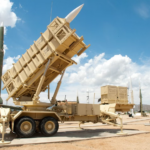
Jammed, Spoofed, and Silenced: How Modern Threats Are Targeting Missiles and Drone Swarms And Why Shielding Is the Answer
April 8, 2026Protecting missiles from EMI.
Real-world rocket science.
How shielding keeps stray electromagnetic energy from detonating ordnance or blinding guidance.
FIG. 01Every electronic subsystem in a munition must be protected from the fields around it and the fields it creates.
Key figures
in this article
$57.7B
$77.4B
34%
80–120 dB
6061-T6
The rocket and missile market is expected to grow from $57.7 billion in 2023 to $77.4 billion by 2028, a 34% rise in five years. Every one of those systems has to survive its own electromagnetic environment.
EMI (electromagnetic interference) shielding for munitions is a critical protective measure that prevents unintended electromagnetic energy from triggering or disrupting explosive devices. It ensures radio signals, radar, and power lines cannot cause premature detonation or render guidance systems inoperable.
Safety and reliability, in one seal.
Munitions contain sensitive electronic components and primers that are vulnerable to external electromagnetic fields. Shielding provides two things.
Safety
Protects against Hazards of Electromagnetic Radiation to Ordnance (HERO), preventing stray radio frequencies from accidentally igniting electro-explosive devices (EEDs).
Reliability
Ensures precision-guided munitions (PGMs) maintain signal integrity and accurate targeting in environments filled with electronic noise or intentional jamming.
Match the material to the frequency.
The choice of shielding material depends on the frequency of the interference being blocked.
Conductive metals
High-frequency E-fields
Copper and aluminum are standard for blocking high-frequency electric fields because of their high conductivity.
Magnetic alloys
Low-frequency H-fields
Mu-metal or steel shields against low-frequency magnetic fields by providing a high-permeability path for the magnetic flux.
Advanced composites
Lightweight, broadband
MXene and carbon nanotubes offer lightweight, high-performance shielding for aerospace and defense applications.
Four ways to close the path.
Faraday cages
Enclosing the entire device in a conductive housing to block external E-fields.
Shielded cables
Braided or foil-wrapped cables that keep signal lines from acting as antennas for EMI.
EMI gaskets
Conductive seals placed at the joints and seams of a munition’s housing to maintain electrical continuity and prevent leakage.
Specialty coatings
Copper- or nickel-based conductive sprays applied to non-conductive plastic components to add a layer of protection.
FIG. 02Conductive elastomers, gaskets, and O-rings converted to print at PNA’s Jamaica, NY facility.
A multi-layered approach.
Missile designers layer their defenses to block both external threats, such as radar jamming and EMP, and internal crosstalk between components.
Enclosure shielding
The airframe or specific internal compartments act as a Faraday cage.
Aerospace-grade aluminum alloys such as 6061-T6 are standard: 80–120 dB of shielding while staying lightweight.
Thin nickel, copper, or silver coatings sprayed onto plastic or composite covers create a lightweight conductive barrier.
Sealing mechanical gaps
Any joint, hatch, or access panel is a potential leak for EMI.
Rubber-like gaskets, typically silicone or fluorosilicone, filled with silver-plated aluminum or nickel-graphite particles.
Gasket materials must match the missile’s metal body to prevent dissimilar-metal corrosion, especially on naval missiles exposed to salt spray.
Cable & connector protection
Cables often act as unintended antennas for EMI.
Compact inserts inside standard military connectors block conducted noise at the interface without the weight of bulky shielded cables.
Ferrous-filled silicone and similar materials absorb high-frequency signals and minimize cavity resonances.
Verified at two levels.
Two military standards define how shielding performance is required and verified: one for each subsystem, one for the platform as a whole.
MIL-STD-461G
Subsystem
Sets the requirements for individual subsystems and equipment, such as the guidance computer.
MIL-STD-464D
Platform
Evaluates the entire missile platform to ensure it survives lightning, EMP, and high-intensity radiated fields (HIRF).
The parts that
close the seam.
The shielding products discussed in this article, converted to your print on our Jamaica, NY floor.
EMI / RFI Gaskets
Conductive elastomer gaskets and shielding die-cuts converted to print for enclosure and LRU joints.
Conductive O-Rings
Silver- and nickel-graphite filled O-rings for continuous ground paths in sealed connector interfaces.
Flange Gaskets
Conductive elastomer mounting-flange gaskets for connectors, waveguides, and enclosure interfaces.
Shielding for your munition.
Sealed at every seam.
We work with primes and sub-tier manufacturers to specify, prototype, and supply conductive elastomer gaskets, O-rings, and seals for missile and munitions programs. In-stock materials, custom-cut, no minimum order.
718.412.0468 · Quotes in 24 hours